Basic Chess Rules for Beginners: How Pieces Move and Values
Published
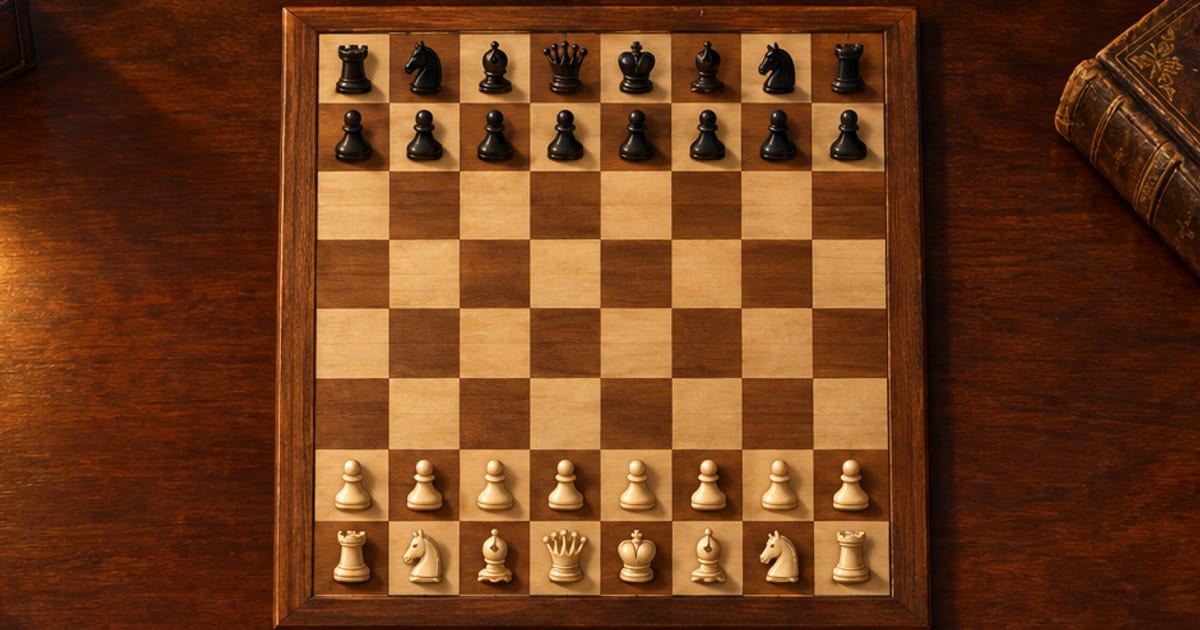
When beginners learn the rules of Chess, popular as a hobby for adults, understanding the board layout and win conditions is the fastest way to improve.
Basic Chess Rules and Board Setup
Figure 1 as text
White: King e1, Queen d1, Rook a1 h1, Bishop c1 f1, Knight b1 g1, Pawn a2 b2 c2 d2 e2 f2 g2 h2
Black: King e8, Queen d8, Rook a8 h8, Bishop c8 f8, Knight b8 g8, Pawn a7 b7 c7 d7 e7 f7 g7 h7
To move: White
Highlighted squares: e1 (focus), e8 (focus)
FEN: rnbqkbnr/pppppppp/8/8/8/8/PPPPPPPP/RNBQKBNR w KQkq - 0 1
A chessboard consists of 8×8 squares, 64 in total. White and Black each have 16 pieces; White sits at the bottom with the White king on e1 near your side and the Black king on e8 on the far side. White moves first, and players alternate turns. The objective is checkmate: trapping the opponent's king so it cannot escape. First, remember that the game begins with White to move and that the win condition requires attacking while keeping your king safe.

How the 6 Pieces Move and Their Features
Chess features 6 types of pieces, each with specific moving directions. Beginners should organize and remember their basic movements.
- King: Moves 1 square in any direction.
- Queen: Moves any number of squares vertically, horizontally, or diagonally.
- Rook: Moves straight vertically or horizontally for any number of squares.
- Bishop: Moves any number of squares diagonally.
- Knight: Moves in an L-shape (2 squares then 1 square sideways) and can jump over other pieces.
- Pawn: Moves 1 square forward and captures enemy pieces diagonally forward.
Figure 2 as text
White: King a1, Rook c5, Bishop e4
Black: King h8
To move: White
Arrows: c5→a5 (main line), c5→c1 (main line), c5→c8 (main line), c5→h5 (main line), e4→a8 (main line), e4→b1 (main line), e4→h1 (main line), e4→h7 (main line)
FEN: 7k/8/8/2R5/4B3/8/8/K7 w - - 0 1
In this diagram, the rook on c5 controls lines vertically and horizontally in a cross, while the bishop on e4 controls 4 diagonal directions. Grasping the control lines of these straight-sliding pieces helps you master dominating wide areas of the board.
Figure 3 as text
White: King e1, Knight g1, Pawn e4 f2 g2 h2
Black: King e8, Pawn d5 e5
To move: White
Highlighted squares: e2 (good), f3 (good), h3 (good)
Arrows: e4→d5 (main line)
FEN: 4k3/8/8/3pp3/4P3/8/5PPP/4K1N1 w - - 0 1
In this position, the knight on g1 demonstrates its unique leap over the pawn in front to reach the e2, f3, and h3 squares. Meanwhile, the pawn on e4 cannot advance straight, but can capture the Black piece diagonally forward on d5, illustrating how moving forward differs from capturing.
Play in the app
Practice tactics on the board to master them. The AI calculates inside your device, so you can play matches through to the end even offline.


Piece Value Guidelines and How to Gain Advantage in Exchanges
Beginners who have just learned Chess rules will evaluate positions better by knowing piece value guidelines. Generally, a pawn is worth 1 point, knights and bishops 3 points, rooks 5 points, and the queen 9 points.
When pieces are captured back and forth, the fundamental goal is to look for profitable exchanges using these values. For instance, capturing a 5-point rook with a 3-point knight gives you a significant material advantage and tilts the position in your favor.
The king, whose capture decides the game, has no point value. Keep it safe as the absolute priority to protect on the board while conducting your game.
Mastering Piece Moves in Practical Games with a Smartphone App

Once you know piece moves, playing matches in a mobile chess app is the fastest route to improvement. 『Chess: Emperor Napoleon』 lets you select opponent strength step-by-step from beginner level. Playing against the AI works entirely offline to the end, making it easy to practice during commutes or free time.
After a game, you can step back through the position from the first move. Reviewing turns where you hesitated on moves will naturally build your skills through practice.
Frequently asked questions
What happens when a pawn reaches the opponent's side?
It can undergo promotion to another piece. Under standard rules, reaching the opponent's last rank lets a pawn transform into a queen, rook, bishop, or knight.
What is the difference between check and checkmate?
The difference is whether the king has an escape. Check directly attacks the king, but it can escape or block. Checkmate means the king has no escape, winning the game immediately.
What kind of position is stalemate?
It is a draw position where the player whose turn it is has no legal move. If the king is not in check but there are no legal moves available, a draw occurs under standard Chess rules.
How do you play the special move called castling?
Move the king and rook simultaneously to ensure king safety. This standard special move safeguards the king while activating the rook toward the center under specific conditions.
Play in the app
Play as Emperor Napoleon and tackle 50 historic battles in the Chess app Chess: Emperor Napoleon. Free to start with in-app purchases.