Guide to Chess Piece Moves and Basic Values from Scratch
Published
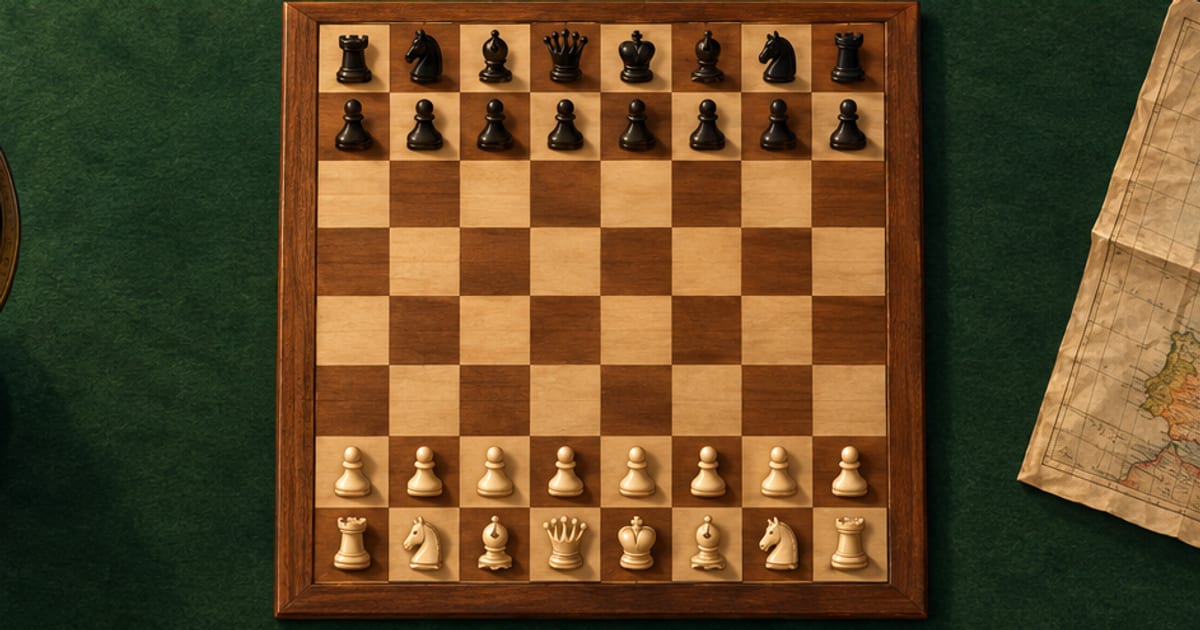
To enjoy chess, start by mastering how each piece moves. The chessboard has 8×8 squares, totaling 64 squares. White and Black each have 16 pieces: 1 king, 1 queen, 2 rooks, 2 bishops, 2 knights, and 8 pawns. White moves first.
The Chessboard and the Basic Moves of the 6 Pieces
Figure 1 as text
White: King a1, Rook c5, Bishop e4
Black: King h8
To move: White
Arrows: c5→a5 (main line), c5→c1 (main line), c5→c8 (main line), c5→h5 (main line), e4→a8 (main line), e4→b1 (main line), e4→h1 (main line), e4→h7 (main line)
FEN: 7k/8/8/2R5/4B3/8/8/K7 w - - 0 1
This diagram shows that the castle-shaped rook on c5 can move any number of squares along ranks and files, while the bishop on e4 can move diagonally. The versatile queen combines both moves to target squares from afar.
Figure 2 as text
White: King e1, Knight g1, Pawn e4 f2 g2 h2
Black: King e8, Pawn d5 e5
To move: White
Highlighted squares: e2 (good), f3 (good), h3 (good)
Arrows: e4→d5 (main line)
FEN: 4k3/8/8/3pp3/4P3/8/5PPP/4K1N1 w - - 0 1
In this position, the knight on g1 jumps over the pawn in front to e2, f3, or h3, demonstrating how the horse-shaped knight leaps over friendly and enemy pieces in an L-shape. Meanwhile, the pawn on e4 captures an enemy piece diagonally on d5: pawns normally move 1 square forward and capture diagonally forward. Lastly, understand the crucial king, which steps 1 square in any direction.

Play in the app
Tactics stick best when practiced on the board. The AI thinks entirely on your device, allowing full offline matches anywhere.


Piece Value Guide and Principles of Favorable Exchanges
In chess, pieces are assigned point values based on mobility. The pawn serves as the base value of 1 point.
| Piece Type | Point Value | Key Trait |
|---|---|---|
| Pawn | 1 point | Moves only forward |
| Knight | 3 points | Jumps over pieces |
| Bishop | 3 points | Long diagonal range |
| Rook | 5 points | Long rank and file range |
| Queen | 9 points | Ranks, files, and diagonals |
The king has no point value because losing it means losing the game. To gain an advantage, avoid losing valuable pieces lightly and seek an exchange for enemy pieces of equal or greater value. Keeping high-value pieces makes delivering checkmate to the enemy king much easier.
Special Rules and How to Improve Using a Smartphone App

Figure 3 as text
White: King e1, Rook h1, Pawn a7 e5
Black: King c8, Pawn d5
To move: White
Last move: d7→d5
Highlighted squares: f1 (focus)
Arrows: e1→g1 (main line), e5→d6 (main line), a7→a8 (main line)
FEN: 2k5/P7/8/3pP3/8/8/8/4K2R w K d6 0 2
Chess includes special rules beyond basic steps. As seen in this position, promotion allows a pawn reaching the last rank on a8 from a7 to become a queen or other piece; castling protects the king on e1 while activating the rook on h1; and en passant lets a pawn on e5 capture an enemy pawn on d6 as it passes.
Playing games on a smartphone app is an ideal way to master these piece moves and special rules.
The chess app Chess: Emperor Napoleon features all standard rules. Its on-device AI enables full offline games, and you can use up to 3 takebacks per game. Beginners can experiment freely on the board without fear of misplays.
Frequently asked questions
What is the recommended order for learning piece moves?
Start with straight-moving pieces like the rook and bishop. Once you understand orthogonal and diagonal lines, learning the queen—which combines both—and the king, which moves 1 square at a time, becomes straightforward. The knight, with its L-shaped leap, and the pawn, which captures diagonally while moving forward, are easier to understand once linear lines are clear.
Is there a trick to remember the initial positions of the king and queen?
Remember that the queen always starts on a square matching its color: the white queen on a light square, the black queen on a dark square. Place the king on the remaining central square so both kings and queens face their counterparts. Placing rooks, knights, and bishops from the edges inward, then setting the queen and finally the king, prevents errors.
What happens when a pawn reaches the other end of the board?
When a pawn reaches the opponent's last rank, promotion occurs. It must be replaced by a queen, rook, bishop, or knight. Players usually choose the queen, the strongest piece. You do not need to exchange it for a captured piece, so you can have 2 or more queens on the board at once.
Between a knight and a bishop with equal points, which is stronger?
Their strength depends on the position. While both have a baseline value of 3 points, knights excel in closed positions with many obstacles because they can jump over pieces. In contrast, bishops shine in open positions with fewer pieces, as their long-range diagonal control can sweep across the board. Using them according to the board's nature is key.
Play in the app
Step into the shoes of Napoleon across 50 historical battles in Chess: Emperor Napoleon. Free to play, with optional in-app purchases.